the living gastronomic intelligence

Every dish is chemistry,
history, and invention.

One living graph of every technique, ingredient, and compound Foodgeist knows. Hover any crystal to read it, click to open its page.

the vortex

The Foodgeist Knowledge Graph

TechniqueIngredientCompoundbridges are shared flavor compounds
the difference

Ask the same question. See the difference.

the question

What molecular compounds make chocolate and blue cheese pair well together?

Generic LLMGeneric answer

ChatGPT

Chocolate and blue cheese actually pair surprisingly well! They share some complementary flavor compounds that create an interesting taste experience. The sweetness of chocolate balances the saltiness and pungency of blue cheese, while their shared umami notes create harmony. Both foods undergo fermentation processes that develop complex flavor profiles. The fat content in both also helps carry and blend the flavors together on your palate. It's one of those unexpected pairings that food enthusiasts love to explore!

General AINo citations

Claude

This is a fascinating pairing rooted in shared volatile compounds. Both chocolate and blue cheese contain pyrazines and certain branched-chain aldehydes that emerge from their respective fermentation and roasting processes. The Maillard reaction in cacao roasting produces compounds that overlap with those generated during cheese aging by Penicillium roqueforti. There are possibly shared methylbutanals involved. However, I should note that the exact compound overlap isn't something I can verify with specific database references, so I'd recommend consulting food chemistry literature for precise CIDs and concentrations.

Search EngineScattered results

Google Search

Result 1: "10 Surprising Food Pairings You Need to Try" — listicle, no science. Result 2: "The Science of Flavor Pairing" — mentions molecular gastronomy generally, paywall after 2 paragraphs. Result 3: Reddit r/AskCulinary — "I heard chocolate and blue cheese work, anyone tried it?" — 3 anecdotal replies. Result 4: Wikipedia "Chocolate" — 8,000-word article, no mention of cheese pairing. Result 5: A 2019 research paper — paywalled, $39.95 to read.

Living Gastronomic IntelligenceSkeptic verified 4.2 / 5.0

Foodgeist

Roasted cacao and blue-mold-ripened cheese share five key volatile aldehydes. The Maillard reaction products in cocoa roasting and the proteolysis products from Penicillium roqueforticultures both produce C5–C6 aldehyde backbones, creating overlapping aroma signatures that the olfactory system perceives as complementary.

shared volatile compounds

2-MethylbutanalPubChem CID 7284Malty, cocoa-like aroma
3-MethylbutanalPubChem CID 590Dark chocolate, cheese rind
PhenylacetaldehydePubChem CID 998Honey-floral, roasted cacao
MethionalPubChem CID 8106Cooked potato, savory depth
Butyric acidPubChem CID 264Sharp, tangy, cheese character

molecular bridge

CHOCOLATETheobrominePyrazinesCatechinsEpicatechinCaffeineSHARED BRIDGE2-Methylbutanal3-MethylbutanalPhenylacetaldehydeMethionalButyric acidBLUE CHEESE2-Heptanone2-NonanoneDelta-decalactoneMethyl ketonesOctanoic acid

related pairings via similar compounds

Dark chocolate + aged parmesan · Cacao nibs + gorgonzola · White chocolate + brie · Cocoa powder + gouda

Recipe · No. 01 · The Worked Example

foodgeist

One platform, seven facets. A whole science in a single knowledge graph.

7 Windows·1 Geist·Serves the Curious·Living Since Forever

“Seven windows. One living knowledge graph of food.”

— Foodgeist, vol. 1

Each tab above opens into one of the deepest food databases ever assembled. 100,000+ verified items and growing — techniques, ingredients, compounds, recipes, industrial processes, and experiments, all connected by molecular evidence.

recipes · 02 – 07

Six More From the Same Book.

Every card opens a live Geist answer that crosses the same seven tabs. Same depth. Different food.

from the crock4,200+ ingredient entries

Miso

One paste. Three civilizations. Five centuries. Over 300 glutamate cousins.

Inside this answer

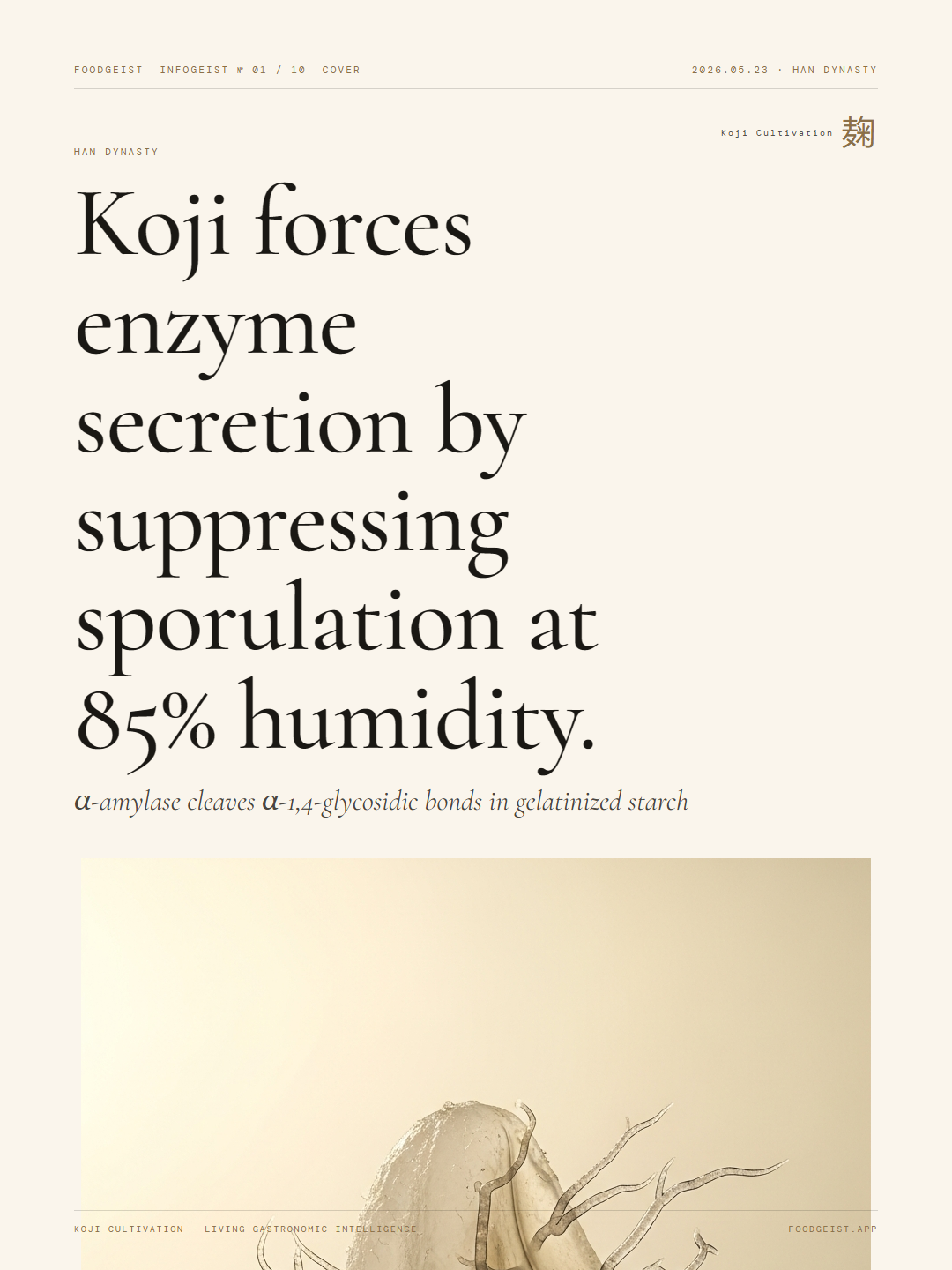
  • Why koji mould is the only organism with a national monument
  • How Ajinomoto factories isolate MSG at scale
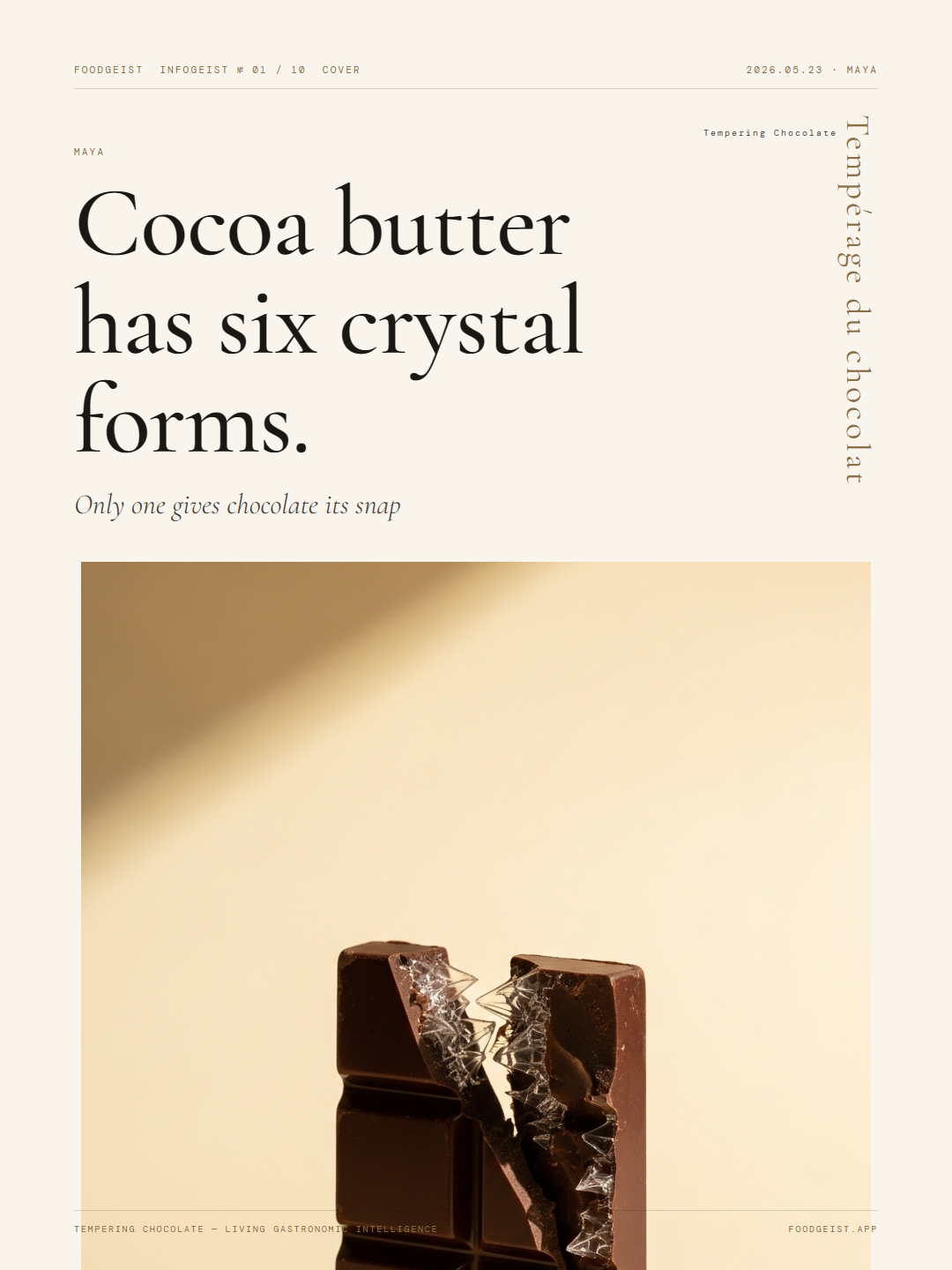
  • The chocolate-miso cookie that changed pastry
open the answer
from the chili jar8,400+ compound records

Capsaicin

Why pain tastes delicious. The TRPV1 receptor mistakes heat for burn.

Inside this answer

  • Scoville units — how they're measured and why they lie
  • The casein molecule that smothers the fire
  • Why Thai birds are 10× hotter than jalapeños
open the answer
from the stone pot44,000+ techniques mapped

Nixtamalization

The 4,000-year-old alkaline hack that unlocked niacin and fed empires.

Inside this answer

  • How lime water rewrites the corn kernel at a molecular level
  • Pellagra epidemics that struck cultures who skipped the step
  • Maseca's 12-minute industrial nixtamal line
open the answer
from the iron pan2,100+ recipe entries

Maillard

The reaction that invented “cooked”. Amino acids plus sugars above 140 °C.

Inside this answer

  • The exact temperature bands for steak, bread crust, and coffee
  • Impossible Burger's heme catalyst trick
  • Why boiling can never brown anything
open the answer
from the fat bath1,800+ industrial processes

Confit

Slow fat. Collagen to gelatin. A duck leg in 1500s Gascony meets TikTok in 2020.

Inside this answer

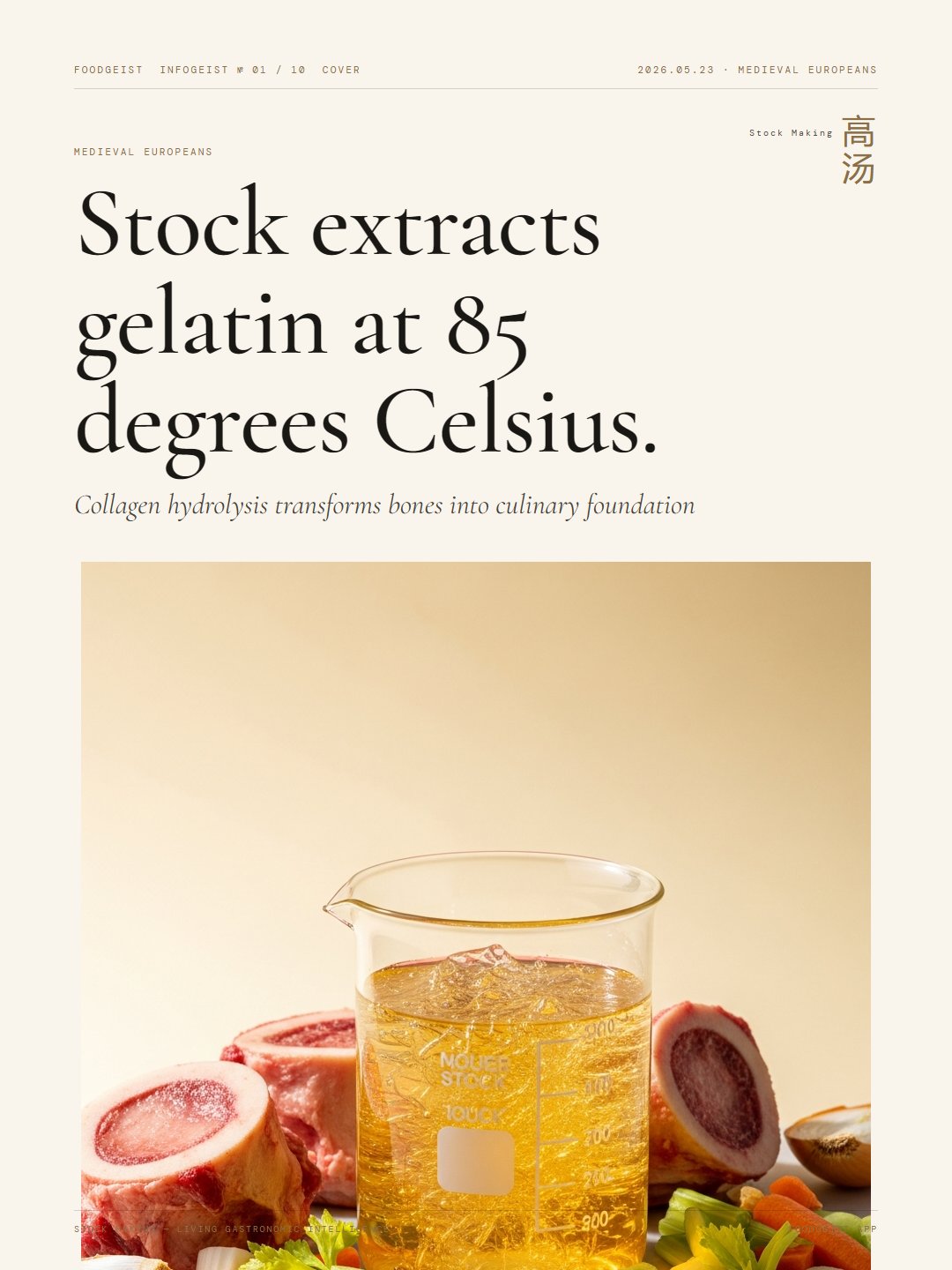
  • Why 82 °C is the magic number for collagen conversion
  • The sous-vide industrial line that replaced duck pots
  • Garlic confit botulism risk — real or overblown?
open the answer
from the dashi bowl15,000+ molecular pairings

Umami

The fifth taste, hidden until a Japanese chemist isolated it from kombu in 1908.

Inside this answer

  • Ikeda's 38 pounds of kombu that changed nutrition science
  • Why Parmigiano crystals are pure glutamate
  • The MSG controversy — what the research actually says
open the answer

Done reading? Pick a door. Every tab of Foodgeist answers the same food question a different way.

The Table of Contents

Eight Doors Into the Same Kitchen.

Pick any chapter. All roads lead to the same living graph.

capabilities

What you can do with Foodgeist

For Chefs

Discover unexpected pairings backed by molecular science. Every bridge is traced to shared volatile compounds with PubChem CIDs.

Browse techniques

For Food Scientists

Access 237K extracted claims from 215K research papers with DOI links. Cross-referenced against USDA, PubChem, and ChEBI.

Explore ingredients

For Content Creators

Find trending food topics before they go viral. Our signal engine monitors social, search, editorial, and academic feeds in real time.

See the Nexus

For Students

Explore the world's largest food knowledge graph. 600K+ entities spanning techniques, ingredients, compounds, and industrial processes across 48+ countries.

Start exploring

For Recipe Developers

Generate never-heard-before recipes with the Mad Chemist. Input any ingredients and get molecular reasoning for why they work together.

Try the Mad Chemist

For Businesses

Commercial API access to the full dataset. REST endpoints for techniques, ingredients, compounds, and pairings. SLA available.

See API plans
get started

Ready to know food at the molecular level?

Whether you need personalized consulting, API access, or regular use of the platform — Foodgeist is ready.

Foodgeist is developed, created, and maintained by one food geek. It gets lonely. It gets expensive. Say hi →

Foodgeist is a participant in the Amazon Services LLC Associates Program, an affiliate advertising program designed to provide a means for sites to earn advertising fees by advertising and linking to Amazon.com. As an Amazon Associate we earn from qualifying purchases.