Atlantic mackerel + Pacific jack mackerel
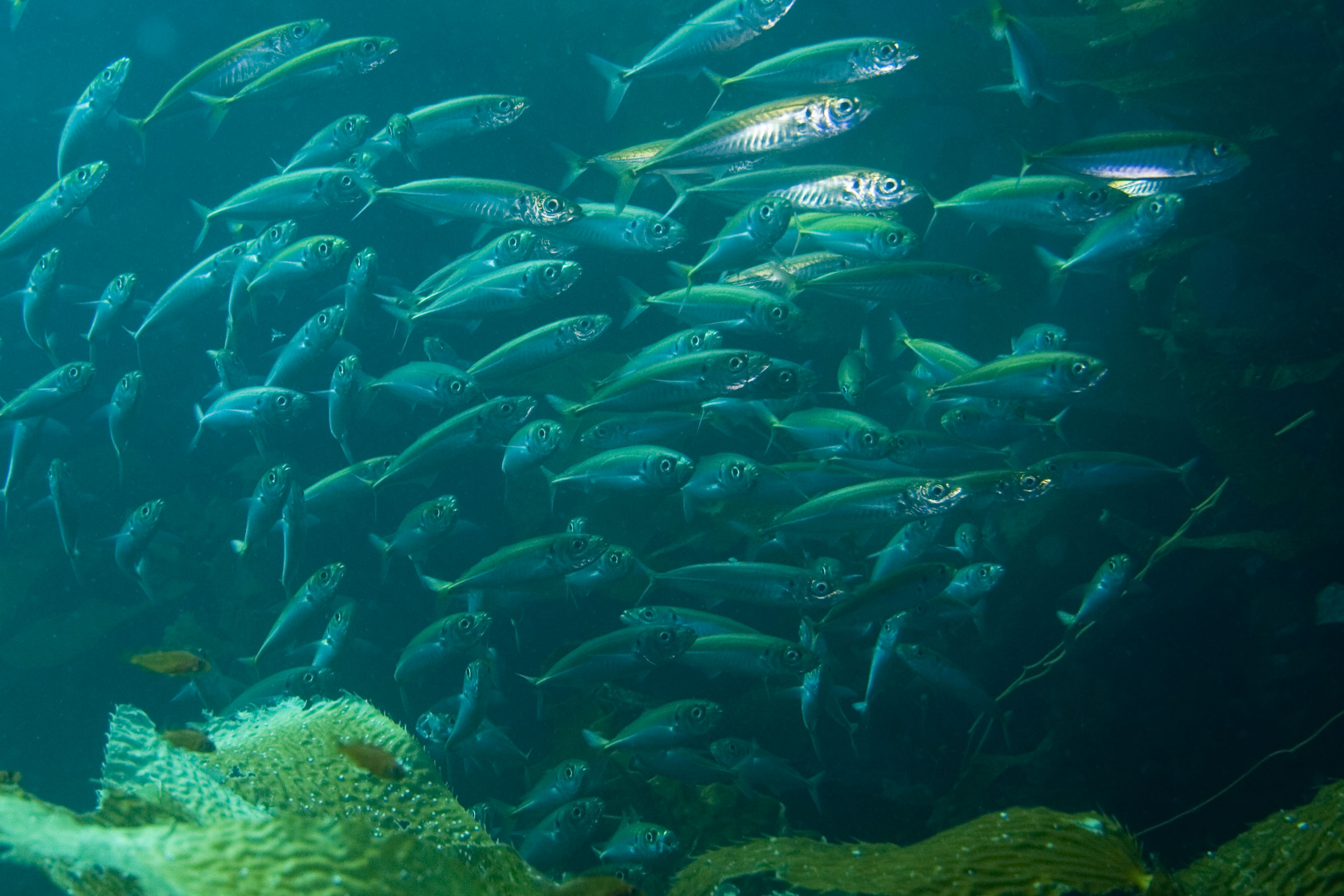
The Pacific jack mackerel,Trachurus symmetricus (also known as the Californian jack mackerel or simply jack mackerel), is an abundant species of pelagic marine fish in the jack family, Carangidae. The species is distributed along the western coast of North America, ranging from Alaska in the north to the Gulf of California in the south, inhabiting both offshore and inshore environments. The Pacific jack mackerel is a moderately large fish, growing to a maximum recorded length of 81 cm, although commonly seen below 55 cm. It is very similar in appearance to other members of its genus, Trachurus, especially Trachurus murphyi, which was once thought to be a subspecies of T. symmetricus, and inhabits waters further south. Pacific jack mackerel travel in large schools, ranging up to 600 miles offshore and to depths of 400 m, generally moving through the upper part of the water column.
Shared flavor compounds
These compounds appear in both Atlantic mackerel and Pacific jack mackerel, giving them a molecular basis for flavor affinity, the pairing principle articulated by Francois Benzi and implemented in flavor-pairing research.
Why it works
The flavor-pairing hypothesis proposes that ingredients sharing significant aromatic compounds harmonize on the palate. Atlantic mackerel and Pacific jack mackerel overlap on 17 key compound(s), which is why classic culinary traditions, and our deterministic matching algorithm, place them together.
- Pairing computed by: pairing-compute
- Methodology: deterministic compound-overlap matching (no LLM)
- Compound data: Wikidata + Wikidata
- Part of: Living Gastronomic Intelligence graph