Butternut squash + Acorn
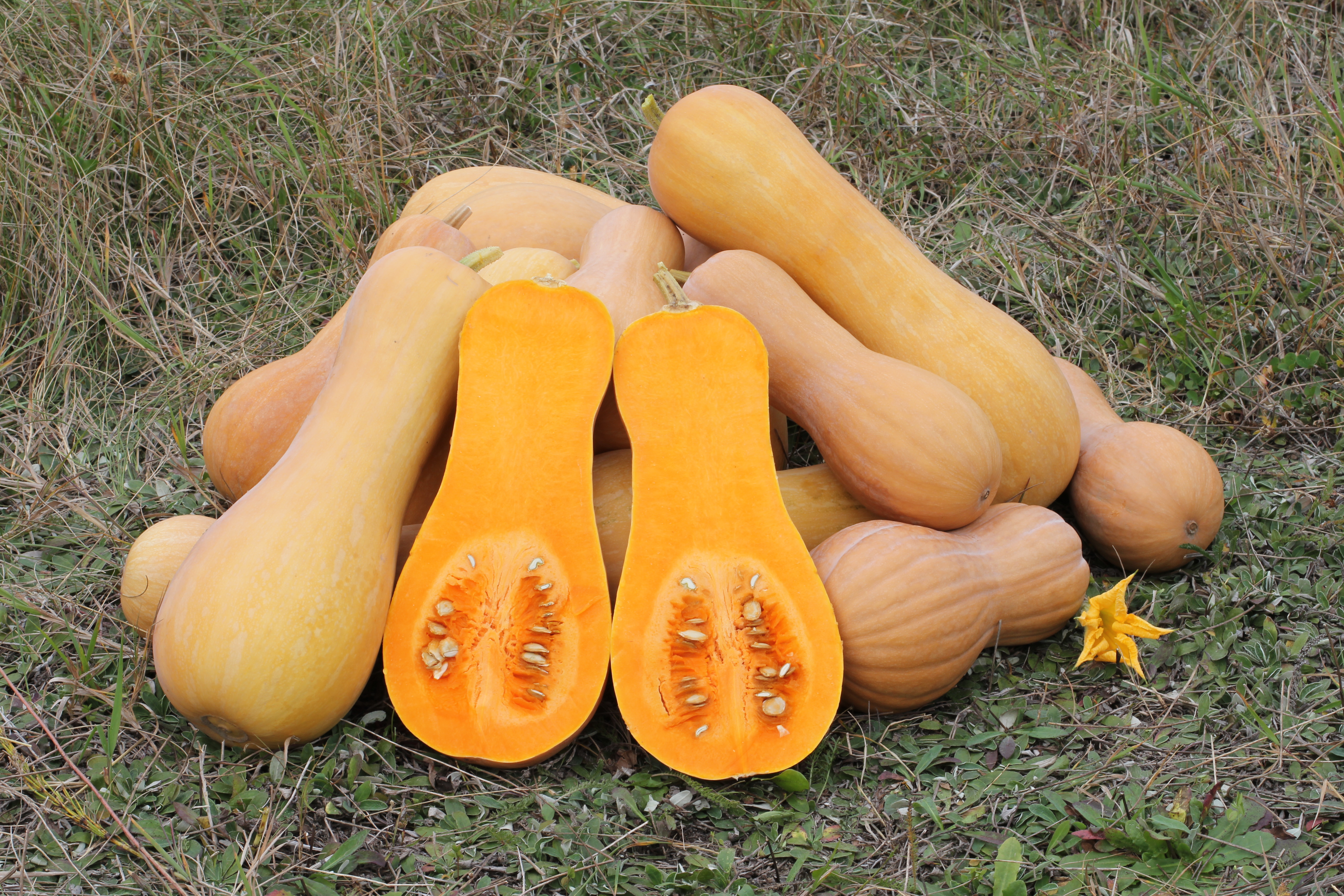
Butternut squash, also known in Australia and New Zealand as butternut pumpkin, is a type of winter squash. It has a sweet, nutty taste similar to that of a pumpkin. It has yellow skin and orange fleshy pulp. When ripe, it turns increasingly deep orange, and becomes sweeter and richer. It grows on a vine. The most popular variety, the Waltham Butternut, originated in Waltham, Massachusetts, where it was developed at the Waltham Experiment Station by Robert E. Young. Dorothy Leggett, widow of Charles Leggett, claims that the Waltham Butternut squash was developed by her husband, Charles Leggett, in Stow, Massachusetts and then subsequently introduced by him to the researchers at the Waltham Field Station.

Nut of the oak tree
Shared flavor compounds
These compounds appear in both Butternut squash and Acorn, giving them a molecular basis for flavor affinity, the pairing principle articulated by Francois Benzi and implemented in flavor-pairing research.
Why it works
The flavor-pairing hypothesis proposes that ingredients sharing significant aromatic compounds harmonize on the palate. Butternut squash and Acorn overlap on 20 key compound(s), which is why classic culinary traditions, and our deterministic matching algorithm, place them together.
- Pairing computed by: pairing-compute
- Methodology: deterministic compound-overlap matching (no LLM)
- Compound data: Wikidata + Wikidata
- Part of: Living Gastronomic Intelligence graph