Japanese chestnut + Purple laver
Japanese Chestnut (Castanea crenata) is a species of chestnut originally native to Japan and South Korea. It is a small to medium-sized deciduous tree growing to 10-15 m tall. The leaves are similar to those of the Sweet Chestnut, though usually a little smaller, 8-19 cm long and 3-5 cm broad. The flowers of both sexes are borne in 7-20 cm long, upright catkins, the male flowers in the upper part and female flowers in the lower part. They appear in summer, and by autumn, the female flowers develop into spiny cupules containing 3-7 brownish nuts that are shed during October.
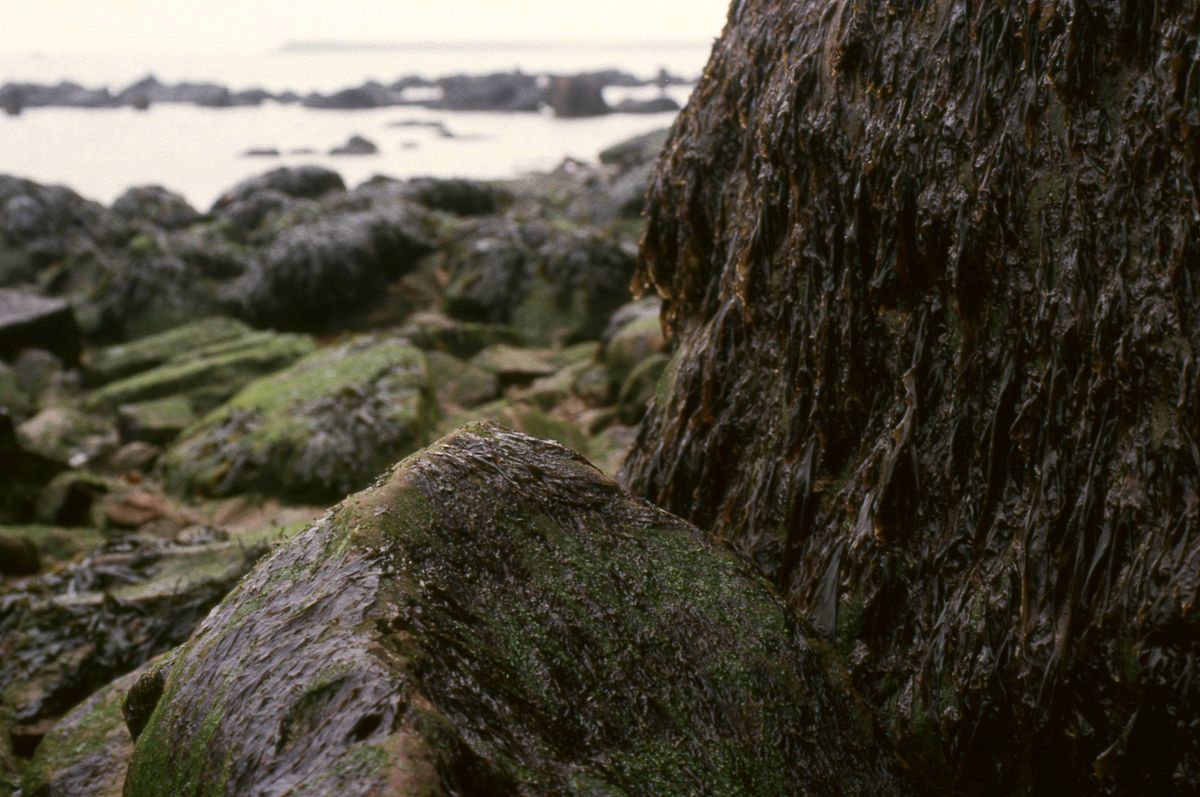
Porphyra is a cold water seaweed that grows in cold shallow sea water. More specifically, it is a foliose red algal genus of laver, comprising approximately 70 species. It grows in the intertidal zone, typically between the upper intertidal zone and the splash zone in cold waters of temperate oceans. In East Asia, it is used to produce the sea vegetable products nori (in Japan) and gim (in Korea). There are considered to be 60 to 70 species of Porphyra worldwide and seven in the British Isles.
Shared flavor compounds
These compounds appear in both Japanese chestnut and Purple laver, giving them a molecular basis for flavor affinity, the pairing principle articulated by Francois Benzi and implemented in flavor-pairing research.
Why it works
The flavor-pairing hypothesis proposes that ingredients sharing significant aromatic compounds harmonize on the palate. Japanese chestnut and Purple laver overlap on 20 key compound(s), which is why classic culinary traditions, and our deterministic matching algorithm, place them together.
- Pairing computed by: pairing-compute
- Methodology: deterministic compound-overlap matching (no LLM)
- Compound data: Wikidata + Wikidata
- Part of: Living Gastronomic Intelligence graph