Evaporated milk + Frozen yogurt
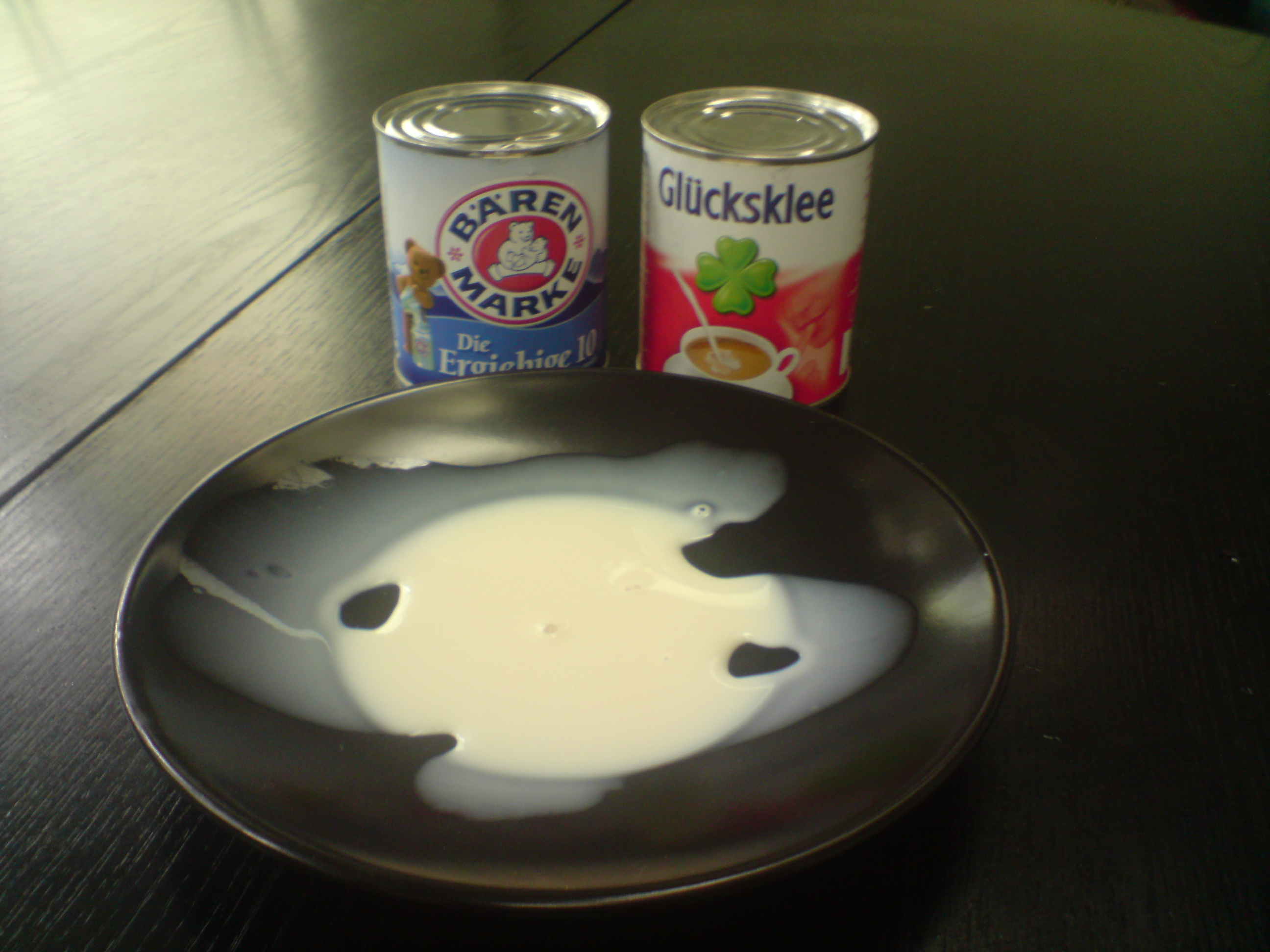
Evaporated milk, also known as dehydrated milk, is a shelf-stable canned milk product with about 60% of the water removed from fresh milk. It differs from sweetened condensed milk, which contains added sugar. Sweetened condensed milk requires less processing since the added sugar inhibits bacterial growth. Evaporated milk should not be confused with condensed milk, dry milk, or powdered milk. [Wikipedia]
Frozen yogurt (also known as frozen yoghurt or by the tradenames FroYo and Frogurt) is a frozen dessert containing yogurt or other dairy products. It is slightly more tart than ice cream, as well as lower in fat (due to the use of milk instead of cream). Frozen yogurt usually consists of milk solids, some kind of sweetener, milk fat, yogurt culture, coloring, and flavoring. Frozen yogurt has come to be used much like ice cream, and is served in a wide variety of flavors and styles. [Wikipedia]
Shared flavor compounds
These compounds appear in both Evaporated milk and Frozen yogurt, giving them a molecular basis for flavor affinity, the pairing principle articulated by Francois Benzi and implemented in flavor-pairing research.
Why it works
The flavor-pairing hypothesis proposes that ingredients sharing significant aromatic compounds harmonize on the palate. Evaporated milk and Frozen yogurt overlap on 17 key compound(s), which is why classic culinary traditions, and our deterministic matching algorithm, place them together.
- Pairing computed by: pairing-compute
- Methodology: deterministic compound-overlap matching (no LLM)
- Compound data: Wikidata + Wikidata
- Part of: Living Gastronomic Intelligence graph