PubChem CID · CC0
2-Pentenal
Odor profile
Multi-model odor estimate · confidence shown
Foods containing this compound


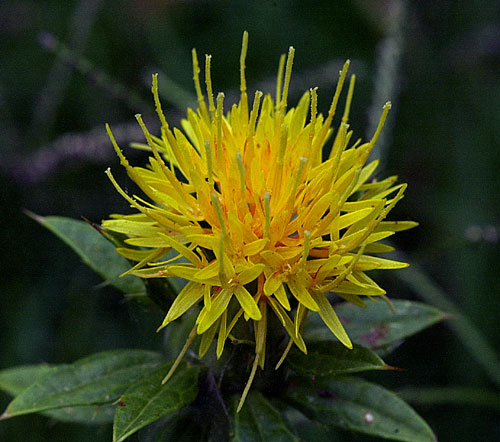
Safflower is a highly branched, herbaceous, thistle-like annual. It is commercially cultivated for vegetable oil extracted from the seeds. Plants are 30 to 150 cm (to in) tall with globular flower heads having yellow, orange, or red flowers. Each branch will usually have from one to five flower heads containing 15 to 20 seeds per head. Safflower is native to arid environments having seasonal rain. It grows a deep taproot which enables it to thrive in such environments.
Cabbage (Brassica oleracea or variants) is a leafy green biennial, grown as an annual vegetable for its dense-leaved heads. Closely related to other cole crops, such as broccoli, cauliflower and brussels sprouts, it descends from B. oleracea var. oleracea, a wild field cabbage. Cabbage heads generally range from 1 to 8 pounds (to kg), and can be green, purple and white. Smooth-leafed firm-headed green cabbages are the most common, with smooth-leafed red and crinkle-leafed savoy cabbages of both colors seen more rarely. It is difficult to trace the exact history of cabbage, but it was most likely domesticated somewhere in Europe before 1000 BC. By the Middle Ages it was a prominent part of European cuisine, although savoys were not developed until the 16th century. Cabbage heads are generally picked during the first year of the plants' life cycles, but those intended for seed are allowed to grow a second year, and must be kept separated from other cole crops to prevent cross pollination. Cabbage is prone to several nutrient deficiencies, as well as multiple pests, bacteria and fungal diseases. The Food and Agriculture Organization of the United Nations (FAO) reports that world production of cabbage and other brassicas (these plants are combined by the FAO for reporting purposes) for calendar year 2010 was almost 58,000,000 metric tons . Almost half were grown in China. Cabbages are prepared in many different ways for eating, although pickling, in dishes such as sauerkraut, is the most popular. Cabbage is a good source of beta-carotene, vitamin C and fiber. Cabbage when contaminated is sometimes a source of food-borne illness in humans.

A fish is any member of a paraphyletic group of organisms that consist of all gill-bearing aquatic craniate animals that lack limbs with digits. Included in this definition are the living hagfish, lampreys, and cartilaginous and bony fish, as well as various extinct related groups. Most fish are ectothermic ("cold-blooded"), allowing their body temperatures to vary as ambient temperatures change, though some of the large active swimmers like white shark and tuna can hold a higher core temperature. Fish are abundant in most bodies of water. They can be found in nearly all aquatic environments, from high mountain streams (e.g., char and gudgeon) to the abyssal and even hadal depths of the deepest oceans (e.g., gulpers and anglerfish). At 32,000 species, fish exhibit greater species diversity than any other group of vertebrates.

Green beans, also known as string beans, snap beans in the northeastern and western United States, or ejotes in Mexico, are the unripe fruit of various cultivars of the common bean (<i>Phaseolus vulgaris</i>). Green bean cultivars have been selected especially for the fleshiness, flavor, or sweetness of their pods. Haricots verts, French for "green beans", also known as French beans, French green beans, French filet beans, Fine beans (British English), is a variety of green bean that is longer, thinner, crisp, and tender. It is different from the haricot bean, which is a dry bean. (Wikipedia)


Round unleavened flatbread made of either nixtamlized corn or wheat
Source
Compound data linked to PubChem CID 12365893, public domain via NCBI. Culinary context + ingredient mappings are maintained by Foodgeist's enrichment fleet and continuously re-matched by the pairings engine. PubChem CID 12365893