PubChem CID · CC0
Cholesterol
Odor profile
Multi-model odor estimate · confidence shown
Foods containing this compound

The chicken (Gallus gallus domesticus) is a domesticated fowl, a subspecies of the Red Junglefowl. As one of the most common and widespread domestic animals, with a population of more than 24 billion in 2003, there are more chickens in the world than any other species of bird. Humans keep chickens primarily as a source of food, consuming both their meat and their eggs.
Coregonus artedi, commonly known as the cisco, is a North American species of freshwater whitefish in the family Salmonidae. The number of species and definition of species limits in North American ciscoes is a matter of debate. Accordingly, Coregonus artedi may refer either in a narrow sense to one of the several types of cisco found e.g. in the Great Lakes, or in a broad sense to the complex of all ciscoes in continental North American lakes, Coregonus artedi sensu lato.

The Atlantic cod (Gadus morhua) is a well-known benthopelagic fish belonging to the family Gadidae widely consumed by humans. It is also commercially known as cod, codling or haberdine.

The rainbow trout (Oncorhynchus mykiss) is a species of salmonid native to tributaries of the Pacific Ocean in Asia and North America. The steelhead is a sea-run rainbow trout usually returning to freshwater to spawn after two to three years at sea; rainbow trout and steelhead trout are the same species. The fish are often called salmon trout. Several other fish in the salmonid family are called trout; some are anadromous like salmon, whereas others are resident in freshwater only. The species has been introduced for food or sport to at least 45 countries, and every continent except Antarctica. In some locations, such as Southern Europe, Australia and South America, they have negatively impacted upland native fish species, either by eating them, outcompeting them, transmitting contagious diseases, or hybridization with closely related species and subspecies that are native to western North America.
"The wild turkey (Meleagris gallopavo) is native to North America and is the heaviest member of the diverse Galliformes. It is the same species as the domestic turkey, which was originally derived from a southern Mexican subspecies of wild turkey (not the related ocellated turkey). Adult wild turkeys have long reddish-yellow to grayish-green legs. The body feathers are generally blackish and dark brown overall with a coppery sheen that becomes more complex in adult males. Adult males, called toms or gobblers, have a large, featherless, reddish head, red throat, and red wattles on the throat and neck. The head has fleshy growths called caruncles. Juvenile males are called jakes, the difference between an adult male and a juvenile is that the jake has a very short beard and his tail fan has longer feathers in the middle. The adult male's tail fan will be all the same length. When males are excited, a fleshy flap on the bill expands, and this, the wattles and the bare skin of the head and neck all become engorged with blood, almost concealing the eyes and bill. The long fleshy object over a male's beak is called a snood. When a male turkey is excited, its head turns blue; when ready to fight, it turns red. Each foot has three toes in front, with a shorter, rear-facing toe in back; males have a spur behind each of their lower legs."

Cattle (colloquially cows) are the most common type of large domesticated ungulates. They are a prominent modern member of the subfamily Bovinae, are the most widespread species of the genus Bos, and are most commonly classified collectively as Bos primigenius. Cattle are raised as livestock for meat (beef and veal), as dairy animals for milk and other dairy products, and as draft animals (oxen or bullocks) (pulling carts, plows and the like). Other products include leather and dung for manure or fuel. In some regions, such as parts of India, cattle have significant religious meaning. From as few as 80 progenitors domesticated in southeast Turkey about 10,500 years ago, an estimated 1.3 billion cattle are in the world today. In 2009, cattle became the first livestock animal to have a fully mapped genome.
Gadus is a genus of demersal fish in the family Gadidae, commonly known as cod, although there are additional cod species in other genera. Until recently, three species in the genus were recognized. Modern taxonomy also includes a fourth one, the Alaska pollock (Gadus chalcogrammus), which is not separate from the Norway pollock. Furthermore, Greenland cod (G. ogac) is no longer considered a distinct species but rather a subspecies of Pacific cod (G. macrocephalus).

Clupeinae is a subfamily of herrings, sardines and sprats belonging to the family Clupeidae.

Perciformes, also called the Percomorphi or Acanthopteri, are the largest order of vertebrates, containing about 40% of all bony fish. Perciformes means "perch-like". They belong to the class of ray-finned fish, and comprise over 10,000 species found in almost all aquatic ecosystems.
"Beefalo are a fertile hybrid offspring of domestic cattle, generally a male in managed breeding programs currently, Bos taurus, and the American bison, usually a female in managed breeding programs currently, Bison bison (generally called buffalo in the US). The breed was created to combine the characteristics of both animals for beef production. Beefalo are primarily cattle in genetics and appearance, with the breed association defining a full beefalo as one with 3?8 (37.5%) bison genetics, while animals with higher percentages of bison genetics are called ""bison hybrids""."
Crayfish – also called crawfish or crawdads – are freshwater crustaceans resembling small lobsters, to which they are related; taxonomically, they are members of the superfamilies Astacoidea and Parastacoidea. They breathe through feather-like gills and are found in bodies of water that do not freeze to the bottom. They are mostly found in brooks and streams where there is fresh water running, and which have shelter against predators. Most crayfish cannot tolerate polluted water, although some species such as the invasive Procambarus clarkii are more hardy. Crayfish feed on living and dead animals and plants. In Australia, New Zealand and South Africa, the term crayfish or cray generally refers to a saltwater spiny lobster, of the genus Jasus that is indigenous to much of southern Oceania, while the freshwater species are usually called yabby, from the indigenous Australian and Maori names for the animal respectively, or by other names specific to each species. An exception is the freshwater Murray crayfish, which belongs to the family Parastacidae and is found on Australia's Murray River.
The domestic pig is a large, domesticated, even-toed ungulate that traces its ancestry to the wild boar; it is considered a subspecies of the wild boar or a distinct species in its own right. Their head plus body length ranges from 0.9 to 1.8 m (35 to 71 in) and adults can weigh between 50 to 350Â kg (110 to 770Â lb). Compared to other artiodactyls, their head is relatively long, pointed, and free of warts. Even-toed ungulates are generally herbivorous, although the domestic pig is an omnivore, like its wild ancestor. Domestic pigs are farmed primarily for the consumption of their flesh, called pork. The animal's bones, hide, and bristles have been fashioned into items such as brushes. Domestic pigs, especially the pot-bellied pig, are also kept as pets.
Coffee is a brewed beverage prepared from the roasted or baked seeds of several species of an evergreen shrub of the genus Coffea. The two most common sources of coffee beans are the highly regarded Coffea arabica, and the "robusta" form of the hardier Coffea canephora. The latter is resistant to the coffee leaf rust (Hemileia vastatrix), but has a more bitter taste. Coffee plants are cultivated in more than 70 countries, primarily in equatorial Latin America, Southeast Asia, and Africa. Once ripe, coffee "berries" are picked, processed and dried to yield the seeds inside. The seeds are then roasted to varying degrees, depending on the desired flavor, before being ground and brewed to create coffee.

Anchovies are a family (Engraulidae) of small, common salt-water forage fish. There are 144 species in 17 genera, found in the Atlantic, Indian, and Pacific Oceans. Anchovies are usually classified as an oily fish.
The blue whiting, Micromesistius poutassou, one of the two species in the genus Micromesistius in the cod family, is common in the northeast Atlantic Ocean from Morocco to Iceland and Spitsbergen. It also occurs in the northern parts of the Mediterranean, where it may be locally abundant. Blue whiting also occur in the northwest Atlantic Ocean between Canada and Greenland, but is considered rare. It has a long, narrow body and a silvery underbody. The fish can attain a length of more than 40 cm. The average length of blue whiting caught off the west shores of the UK is 31 cm. A related species, southern blue whiting, Micromesistius australis, occurs in the Southern Hemisphere.

The common bream, freshwater bream, bream, bronze bream or carp bream, Abramis brama, is a European species of freshwater fish in the family Cyprinidae. It is now considered to be the only species in the genus Abramis.

A corn chip is a snack food made from cornmeal fried in oil or baked, usually in the shape of a small noodle or scoop. Corn chips are thick, rigid and very crunchy. Corn chips have the strong aroma and flavor of roasted corn, and are often heavily dusted with salt. While American-style corn chips and tortilla chips are both made from corn, the corn in tortilla chips is subjected to the nixtamalization process, resulting in a milder flavor and aroma, and a less rigid texture. Tortilla chips also tend to be larger, thinner, and less salty than American-style corn chips. [Wikipedia]

A waffle is a batter- or dough- based cake cooked in a waffle iron patterned to give a distinctive and characteristic shape. There are many variations based on the type and shape of the iron and the recipe used. Waffles are eaten throughout the world, particularly in Belgium and the United States. Common toppings are strawberries, chocolate, sugar, honey, syrups, ice cream, and more. [Wikipedia]
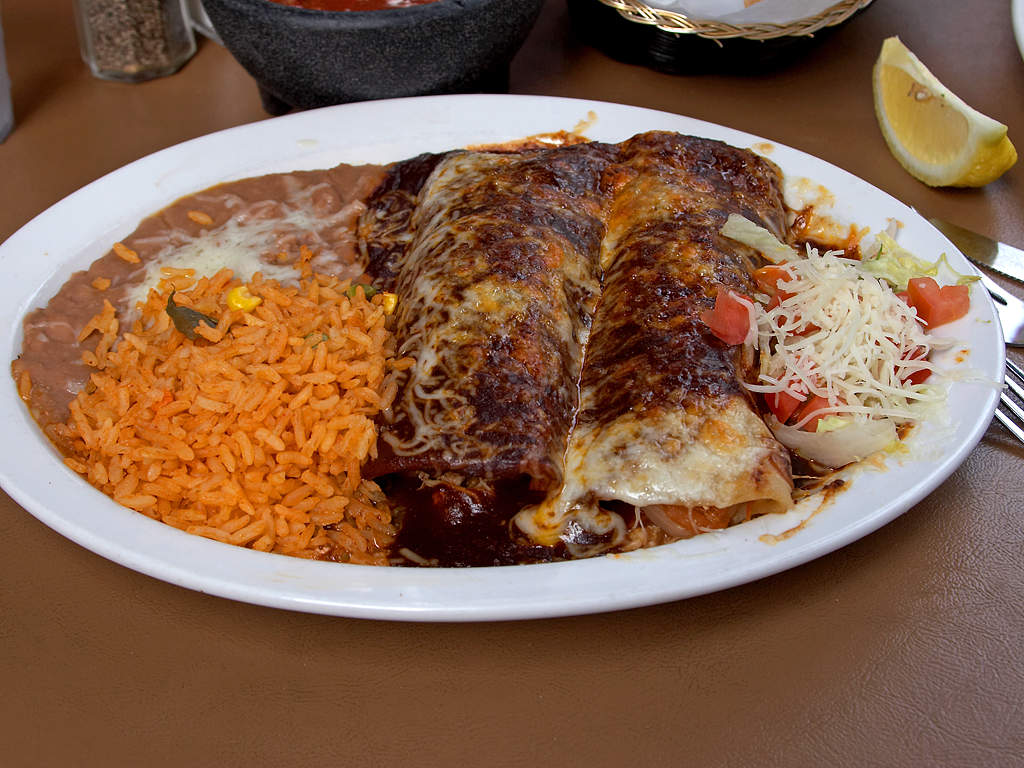
Chimichanga, also known as chivichanga or chimmy chonga, is a deep-fried burrito that is popular in Southwestern U.S. cuisine, Tex-Mex cuisine, and the Mexican states of Sinaloa and Sonora. The dish is typically prepared by filling a flour tortilla with a wide range of ingredients, most commonly rice, cheese, machaca, carne adobada, or shredded chicken, and folding it into a rectangular package. It is then deep-fried and can be accompanied with salsa, guacamole, sour cream and/or cheese. Many restaurants offer non-fried chimichangas, which are similar to normal burrito, with cheese sauce, guacamole, and tomato. [Wikipedia]
Tapioca is a starch extracted from Manihot esculenta. In India, the term 'Tapioca' is used to represent the root of the plant (Cassava), rather than the starch. In Vietnam, it is called bot nang. In Indonesia, it is called singkong. In the Philippines, it is called sago. Tapioca is a staple food in some regions and is used worldwide as a thickening agent, mainly in foods. In Britain, the word tapioca often refers to a milk pudding thickened with arrowroot, while in Asia the sap of the sago palm is often part of its preparation. Tapioca is gluten-free, and almost completely protein-free. [Wikipedia]
Tostada is a Spanish word which literally means "toasted". It is used in Latin America to name several different traditional local dishes which have in common the fact they are toasted or use a toasted ingredient as the main base of their preparation. [Wikipedia]
Butterfat or milkfat is the fatty portion of milk. Milk and cream are often sold according to the amount of butterfat they contain. [Wikipedia] See also "dairyforall.com":http://www.dairyforall.com/butteroil.php
A relish is a cooked, pickled, or chopped vegetable or fruit food item which is typically used as a condiment. In North America, relish commonly alludes to sweet pickle relish-like sauce that often condiments hot dogs, hamburgers and other types of fast food. [Wikipedia]

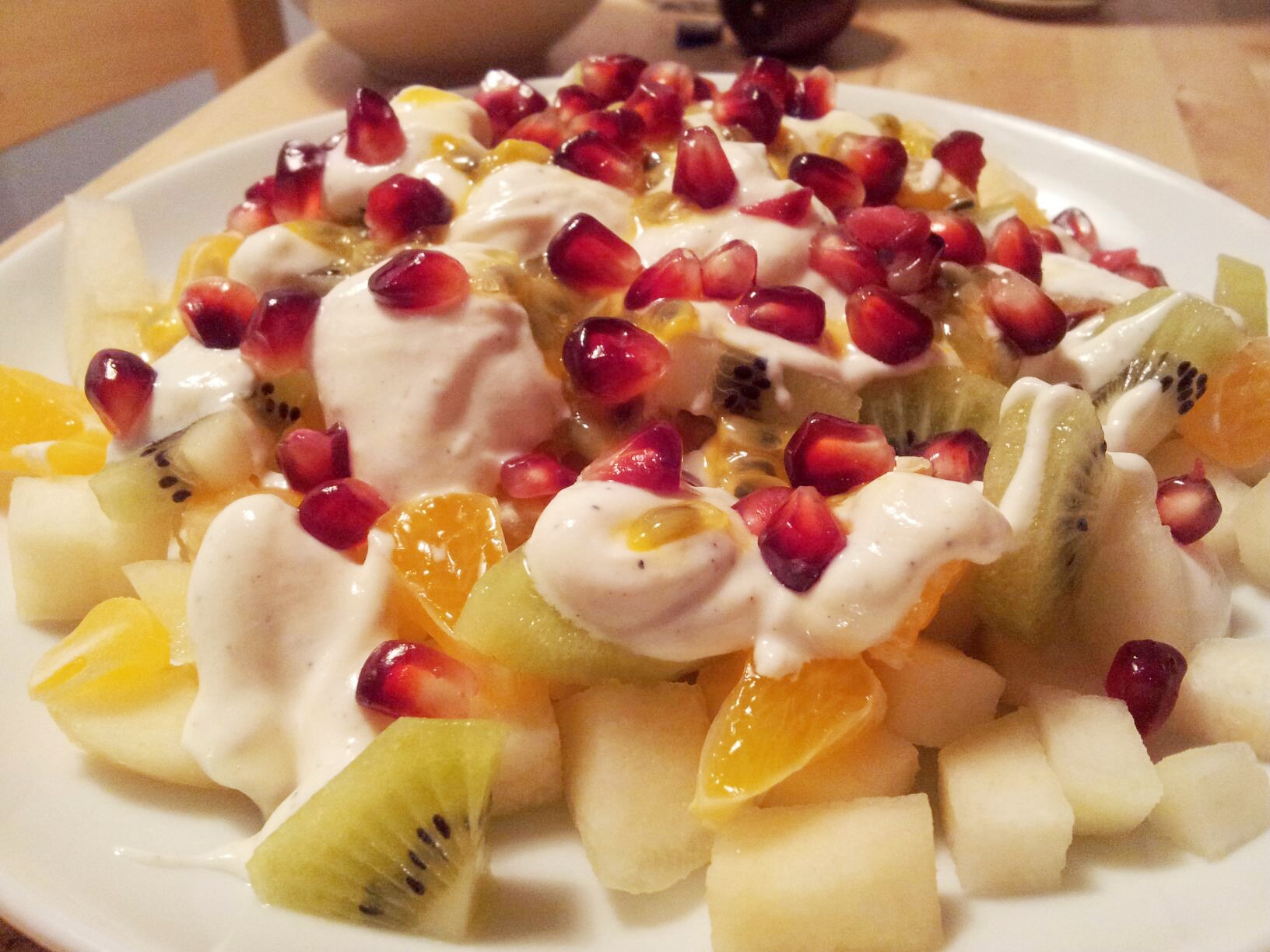
Fruit salad (also called Macedonia) is a dish consisting of various kinds of fruit, served in a liquid, either in their own juices or a syrup. When served as an appetizer or as a dessert, a fruit salad is sometimes known as a fruit cocktail or fruit cup. [Wikipedia]

An ice cream cone, poke or cornet is a dry, cone-shaped pastry, usually made of a wafer similar in texture to a waffle, allowing ice cream to be eaten without a bowl or spoon. Various types of ice-cream cones include waffle cones, cake cones (or wafer cones), pretzel cones, and sugar cones. [Wikipedia]
A cracker is a baked good typically made from grain flour dough and usually manufactured in large quantities. Crackers (equivalent to savory biscuits in the UK) are usually flat, crisp, small in size and are made in various shapes, though are commonly round or square. Flavorings or seasonings, such as salt, herbs, seeds, and/or cheese, may be added to the dough or sprinkled on top before baking. Crackers are eaten on their own, or can accompany other food items, such as cheese or meat slices, or dips. [Wikipedia]
A rice cake may be any kind of food item made from rice that has been shaped, condensed, or otherwise combined into a single object. A wide variety of rice cakes exist in many different cultures in which rice is eaten, and are particularly prevalent in Asia. Common variations include cakes make with rice flour, those made from ground rice, and those made from whole grains of rice compressed together or combined with some other binding substance. [Wikipedia]
Akutaq or agutak, also known as Eskimo ice cream, is a common food in western Alaska, consisting of whipped fat mixed with berries, with optional additions such as fish and sugar. The word comes from Yupik and means "something mixed". There are many variations of Akutaq, but most are based around mixing berries, meat, leaves, or roots with animal oil or fat (these are now often replaced by Crisco). Cranberries, salmonberries, crowberries, cloudberries, and blueberries are common fruits. Salmon and caribou are common meats. Reindeer tallow, moose tallow, walrus tallow, caribou tallow, or seal oil can be used. Sugar is sometimes added (although not traditionally). Occasionally, extra water is needed as well. [Wikipedia]
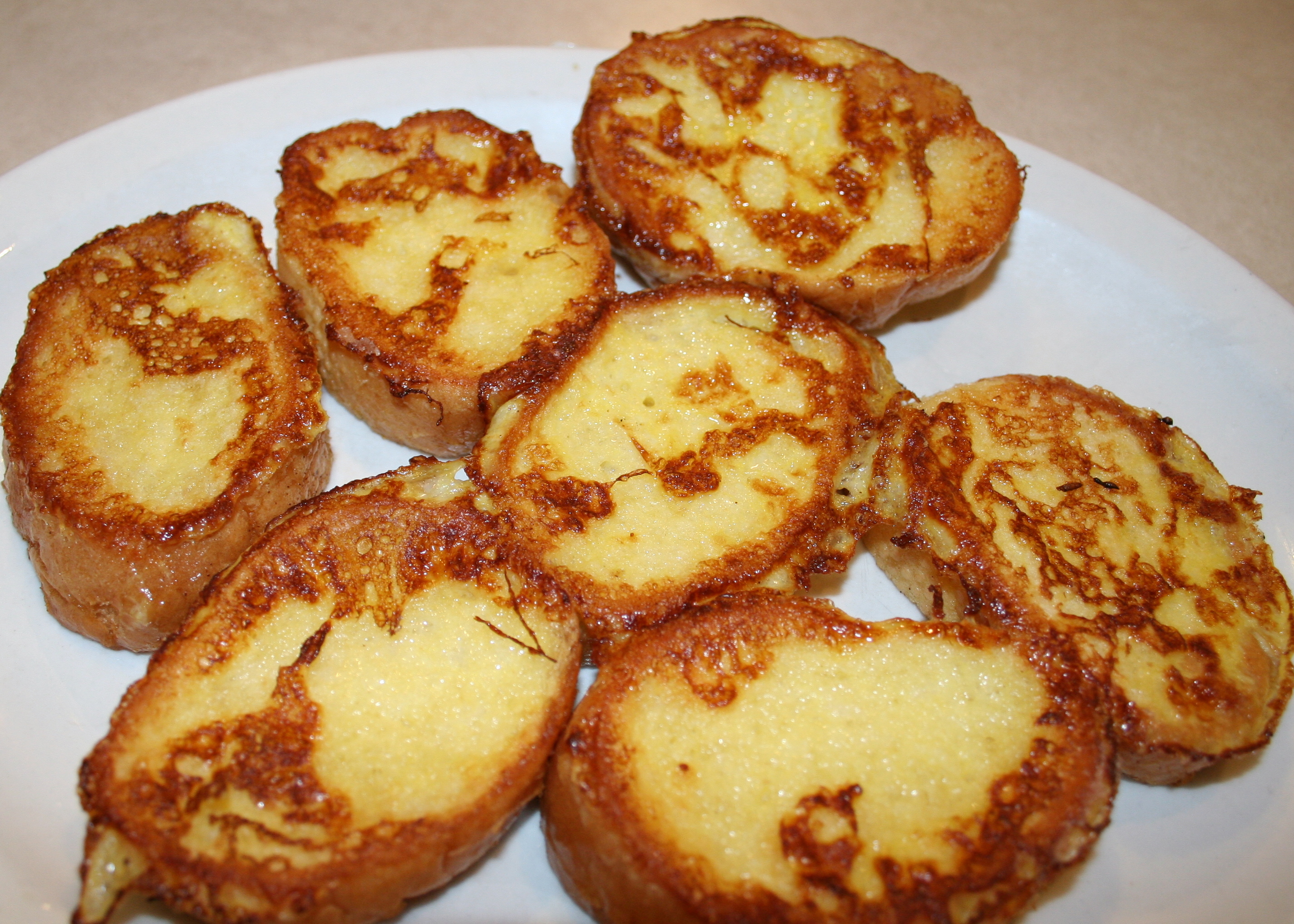
French toast or eggy bread is a dish of bread soaked in eggs then fried. Where French toast is served as a sweet dish, milk, sugar, or cinnamon are also commonly added before frying, and it may be then topped with sugar, butter, fruit, syrup, or other items. Where it is a savory dish, it is generally fried with a pinch of salt, and then served with a sauce such as ketchup or mayonnaise. [Wikipedia]
Brown bread is a designation often given to breads made with significant amounts of whole grain flour, usually rye or wheat, and sometimes dark-coloured ingredients such as molasses or coffee. In Canada and the United Kingdom it simply refers to whole wheat bread, except in the Maritimes, where it implies a bread made with molasses.
A soft drink (also called a soda, pop, coke, soda pop, fizzy drink, tonic, or carbonated beverage) is a non-alcoholic beverage that typically contains water (often, but not always carbonated water), a sweetener, and a flavoring agent. The sweetener may be sugar, high-fructose corn syrup, or a sugar substitute (in the case of diet drinks). A soft drink may also contain caffeine, fruit juice, or both. Widely sold soft drink flavors are cola, lemon-lime, root beer, orange, grape, vanilla, ginger ale, fruit punch, and sparkling lemonade. Soft drinks may be served chilled or at room temperature. They are rarely heated. [Wikipedia]
Ascidiacea (commonly known as the ascidians or sea squirts) is a class in the Tunicata subphylum of sac-like marine invertebrate filter feeders. Ascidians are characterized by a tough outer "tunic" made of the polysaccharide tunicin, as compared to other tunicates which are less rigid.
A dairy product is food produced from the milk of mammals. Dairy products are usually high energy-yielding food products. A production plant for the processing of milk is called a dairy or a dairy factory. Apart from breastfed infants, the human consumption of dairy products is sourced primarily from the milk of cows, yet goats, sheep, yaks, horses, camels, and other mammals are other sources of dairy products consumed by humans. Dairy products are commonly found in European, Middle Eastern, and Indian cuisine, whereas aside from Mongolian cuisine they are little-known in traditional Asian cuisine.

spice mix
Source
Compound data linked to PubChem CID 304, public domain via NCBI. Culinary context + ingredient mappings are maintained by Foodgeist's enrichment fleet and continuously re-matched by the pairings engine. PubChem CID 304