9(S)-HPODE(1−)
Molecular structure
Biochemical reactions
Metabolic reactions from curated biochemical databases · peer-reviewed
(9S)-hydroperoxy-(10E,12Z)-octadecadienoate = colneleate + H2O
(9Z,12Z)-octadecadienoate + O2 = (9S)-hydroperoxy-(10E,12Z)-octadecadienoate
(11S)-hydroperoxy-(9Z,12Z)-octadecadienoate = (9S)-hydroperoxy-(10E,12Z)-octadecadienoate
(13R)-hydroperoxy-(9Z,11E)-octadecadienoate = (9S)-hydroperoxy-(10E,12Z)-octadecadienoate
(9S)-hydroperoxy-(10E,12Z)-octadecadienoate = (10R,11R)-epoxy-(9S)-hydroxy-(12Z)-octadecenoate
(9S)-hydroperoxy-(10E,12Z)-octadecadienoate = (11S)-hydroxy-(9S,10S)-epoxy-(12Z)-octadecenoate
Foods containing this compound


Flax (also known as common flax or linseed) is a member of the genus Linum in the family Linaceae. It is a food and fibre crop that is grown in cooler regions of the world. Flax fibres are taken from the stem of the plant and are two to three times as strong as those of cotton. As well, flax fibres are naturally smooth and straight. Europe and North America depended on flax for cloth until the nineteenth century, when cotton overtook flax as the most common plant used for making linen paper. Flax is grown on the Canadian Praires for linseed oil, which is used as a drying oil in paints and varnish and in products such as linoleum and printing inks. It is native to the region extending from the eastern Mediterranean to India and was probably first domesticated in the Fertile Crescent. Flax was extensively cultivated in ancient Ethiopia and ancient Egypt. A discovery reported in 2009 of spun, dyed, and knotted wild flax fibers in a prehistoric cave in the Republic of Georgia shows that the plant was already in use by humans at the surprisingly early date of 30,000 B.C. New Zealand flax is not related to flax but was named after it, as both plants are used to produce fibers.
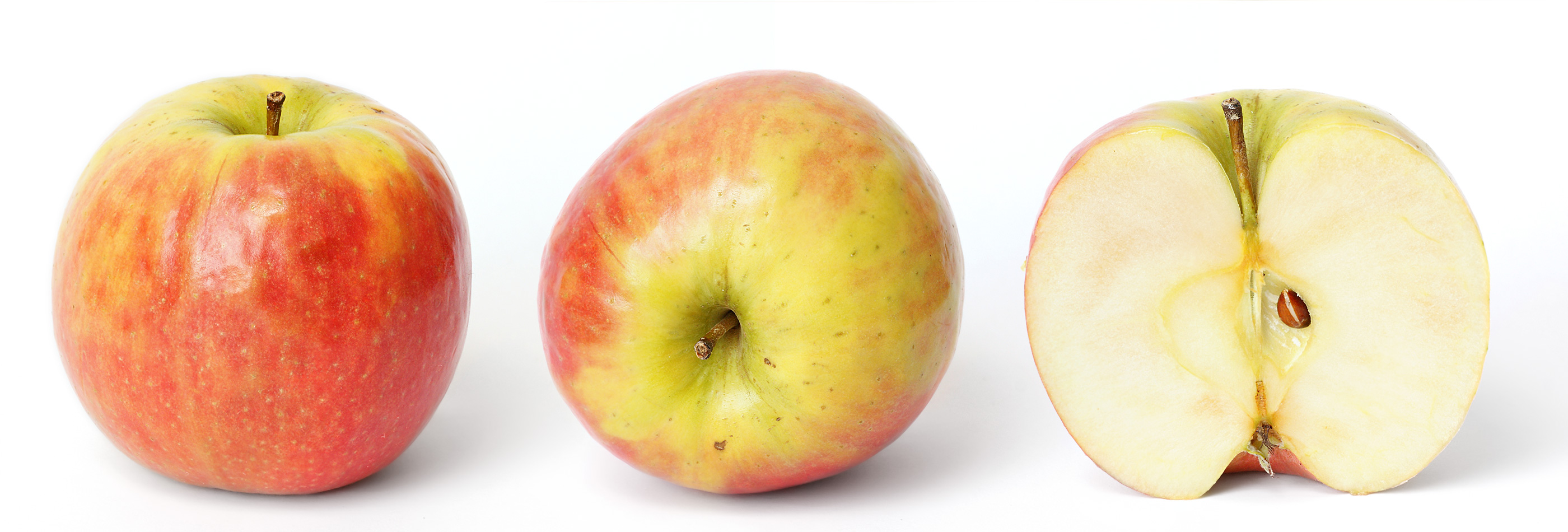
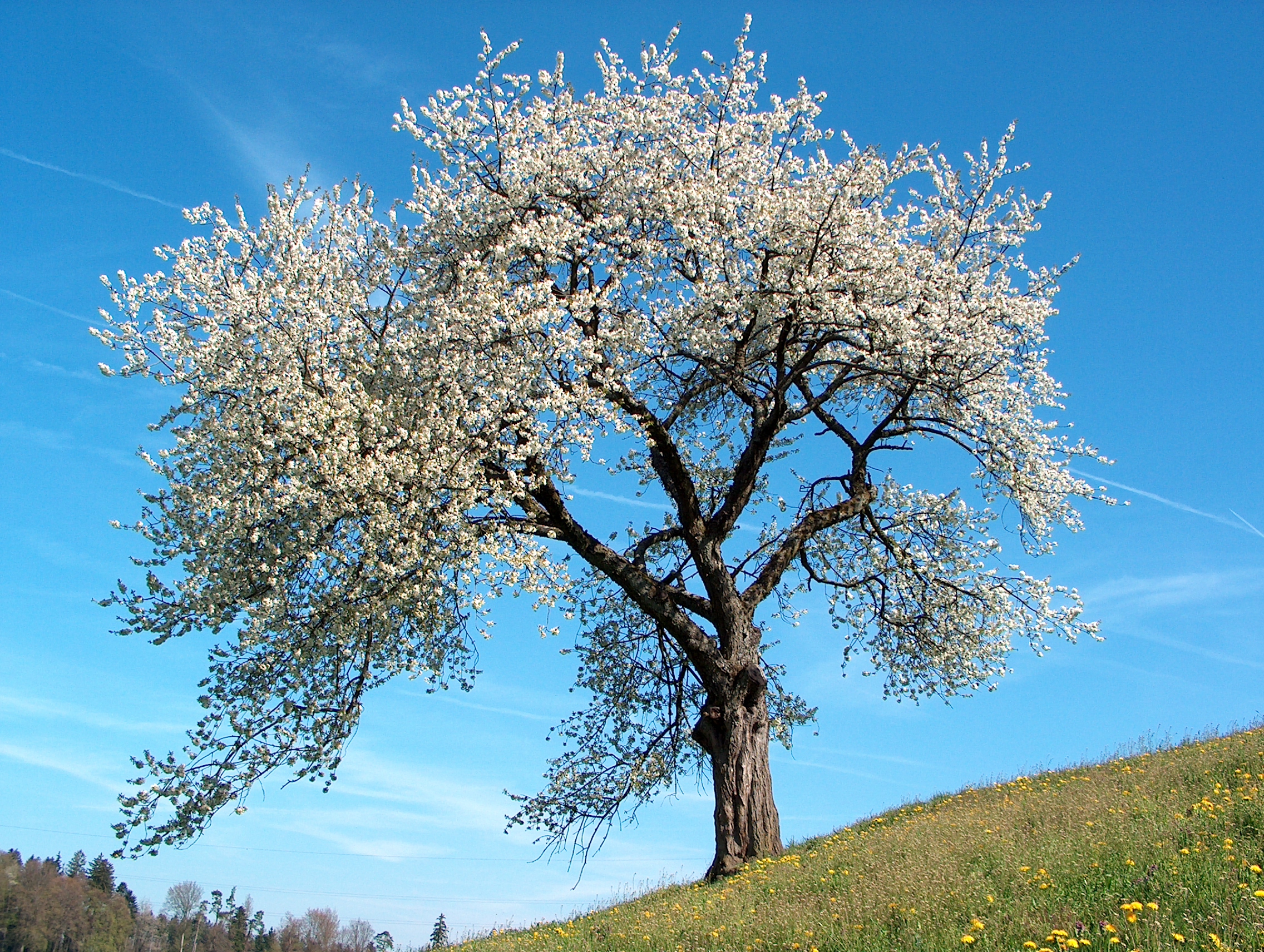
The apple is the pomaceous fruit of the apple tree, species Malus domestica in the rose family. It is one of the most widely cultivated tree fruits, and the most widely known of the many members of genus Malus that are used by humans. Apples grow on small, deciduous trees. The tree originated in Central Asia, where its wild ancestor, Malus sieversii, is still found today. Apples have been grown for thousands of years in Asia and Europe, and were brought to North America by European colonists. Apples have been present in the mythology and religions of many cultures, including Norse, Greek and Christian traditions. In 2010, the fruit's genome was decoded, leading to new understandings of disease control and selective breeding in apple production. There are more than 7,500 known cultivars of apples, resulting in a range of desired characteristics. Different cultivars are bred for various tastes and uses, including in cooking, fresh eating and cider production. Domestic apples are generally propagated by grafting, although wild apples grow readily from seed. Trees are prone to a number of fungal, bacterial and pest problems, which can be controlled by a number of organic and non-organic means. About 69 million tonnes of apples were grown worldwide in 2010, and China produced almost half of this total. The United States is the second-leading producer, with more than 6% of world production. Turkey is third, followed by Italy, India and Poland. Apples are often eaten raw, but can also be found in many prepared foods (especially desserts) and drinks. Many beneficial health effects have been found from eating apples; however, two forms of allergies are seen to various proteins found in the fruit.
Verified Data
Compound identity and culinary context are continuously cross-referenced across open scientific databases and maintained by Foodgeist's enrichment pipeline.
The Geist can be wrong. Some flavor, taste, and pairing values are model-predicted, not lab-measured.